
|
(My scholarly ancestry follows below) |
| #scholars INDEX 600-10x2=580px #Russell Click on the letter for a larger, more readable view. 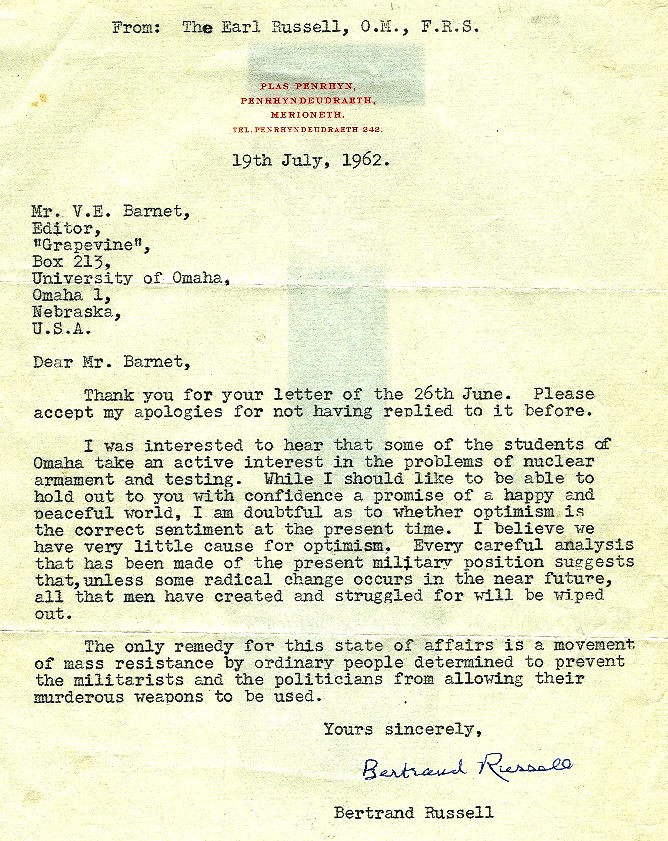 I never met Lord Russell, but his essay, "Why I am not a Christian," changed my life. I was a fanatical fundamentalist as a kid, very certain of the truth. Reading Tom Paine's Age of Reason shook my belief in the inerrancy of the Bible, and Russell made me hostile to religion, a useful overreaction for a high school junior (or was I a sophomore?). I knew nothing about Principia Mathematica and so many of his other writings and very little about his life, but I did know about his political activism when I was a college freshman writing for a school newspaper, so I wrote him and was amazed to receive his response. I believe the delay he refers to was caused by his being jailed for his anti-nuclear protests. #Gates 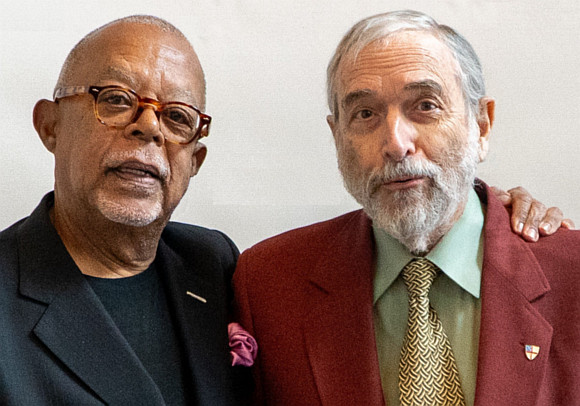 The renowed filmmaker and literary critic Henry Louis Gates Jr was in Kansas City 2025 January 17 at Union Station when the Alvin Brooks Kansas Citian Inspiration Award was given to Ms Bridgette Williams. Gates spoke about hosting his famous TV series on PBS, Finding Your Roots. I had a brief and memorable chance to visit with him afterwards. His hand on my shoulder felt like a blessing. 180420Knitter 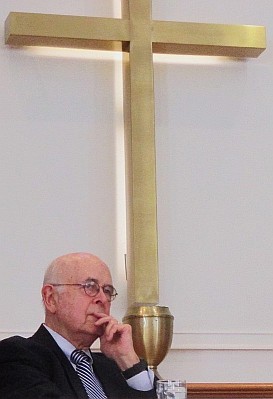 Distinguished
theologian Paul F Knitter visited Colonial
Congregational Church
in Prairie Village 2018 April 20 and spoke on "Attitudes toward the
Religious
Other: The Christian Landscape," ways Christians can approach thinking
about those of other faiths. Distinguished
theologian Paul F Knitter visited Colonial
Congregational Church
in Prairie Village 2018 April 20 and spoke on "Attitudes toward the
Religious
Other: The Christian Landscape," ways Christians can approach thinking
about those of other faiths.
Vern had a chance to speak briefly with him before his presentation and mentioned that his 2002 book, Introducing Theologies of Religion, is one of the sources for Vern's class, "Ministry in a Pluralistic World," at Central Seminary. Vern also commented during the forum after the lecture. One point of discussion was the difficulty of one person representing an entire faith tradition with its many historical and contemporary expressions. Vern noted that the Kansas City Interfaith Council was organized in 1989 not with representatives of 13 faiths, but with 13 people from different faith backgrounds, thus avoiding this easy trap. Even Christians forget that their faith today might be very different from another Christian's faith across the street (even within Protestantism, not to mention Catholicism or Orthodoxy) or in other parts of the world; and historical development is seldom recognized -- a Southern Baptist today may be very different from one 50 years ago.
Thanks to Jen Greene
for these photos.
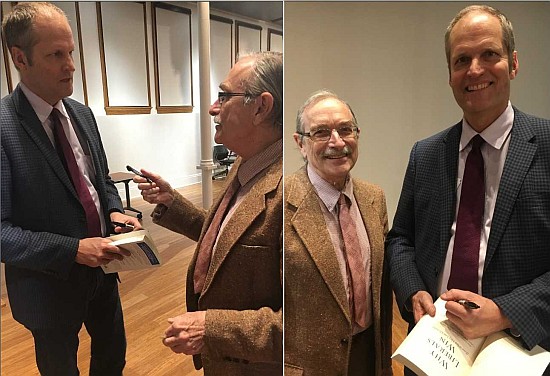
2018 April 30, Stephen
Prothero and Vern discuss
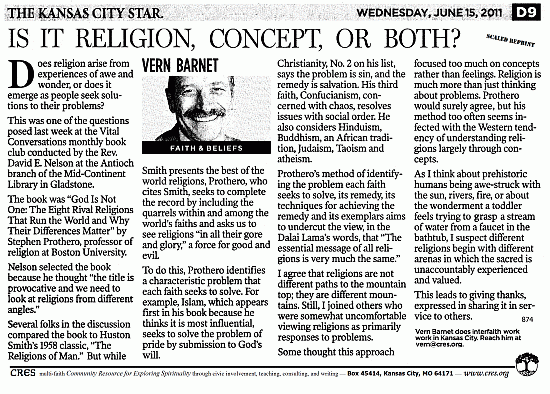
the merits of Prothero's 2010 book, God Is Not One: The Eight
Rival
Religions That Run the World—and Why Their Differences Matter,
which
Vern is using as one of several texts at Central
Seminary.
Another member of the audience at the annual Religious Studies lecture
at KU happened to have a copy of the 2011 column Vern had written about
the book and showed it to them. Prothero signed Vern's copy of his new
book, Why Liberals Win (Even When They Lose Elections).
Prothero's
lecture reviewed his earlier and continuing concern about American
religious
illiteracy, about which he wrote in his 2007 Religious
Literacy: What
Every American Needs to Know--And Doesn't.
Prothero's website is http://stephenprothero.com/.
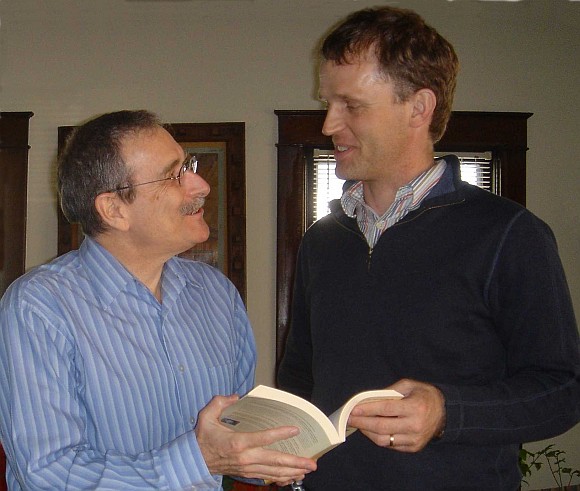 In Vern's Westort home, Vern and Bud Heckman in 2006 plan the nation's first Interfaith Academies, one for religious professionals and one for students, to be held in Kansas City, in part because of access to onsite visits to various religious communities. The 2007 Academies were sponsored by the Pluralism Project at Harvard University, Religions for Peace-USA at the UN Plaza, the Saint Paul School of Theology which also provided housing, and the Greater Kansas City Interfaith Council. Vern also served on the international faculty of scholars. Bud completed editing his book, Interactive Faith, during the Academies. 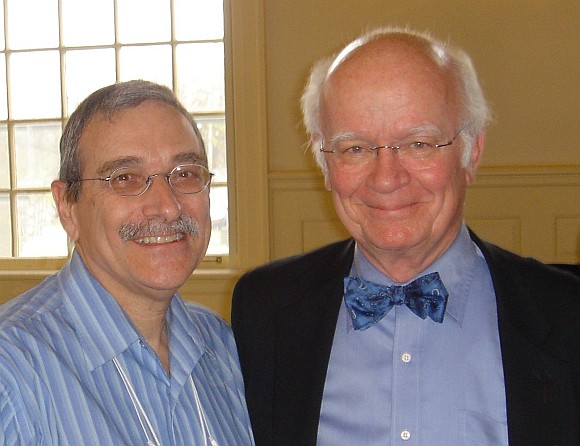 Vern discusses a recently published book with the prolific writer Martin E Marty, 1928-2025, of the University of Chicago, visiting in Kansas City. The story around the Div School when Vern studied there was of a grad student who phoned Marty's office. The professor's secretary answered. The student said, "I'd please like to speak with Dr Marty." The secretary responded, "I'm sorry, Dr Marty has just begin writing a new book." The student replied, "OK, I'll just hold on the line until he's finished." 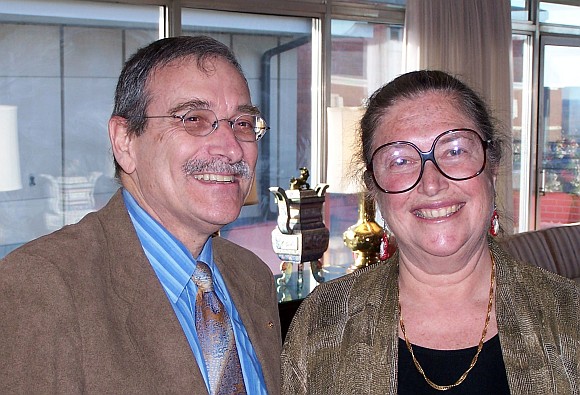 Vern here visits with another University of Chicago Divinity School professor, Wendy Doniger, who stirred international controversy with her book 2009 book, The Hindus: An Alternative History; it was the #1 best seller in India, but then a court case involved charges of heresy and the book was withdrawn by its publisher in India. It has since been issued there by a different publisher. Also a prolific author, Dr Doniger held the post of Mircea Eliade Distinguished Service Professor of History of Religions. 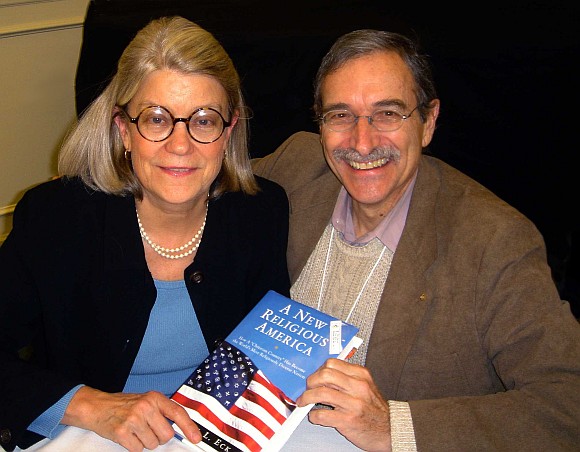 The paths of Harvard's Diana Eck, founder of the Pluralism Project, and Vern have crossed several times. She delivered a key address at the ground-breaking initial conference of the North America Interfaith Netrwork conference in 1988, "A North American Assisi. During another visit to the area, Vern gave her the text of Kansas Governor Bill Graves' 1997 Ramadan Proclamation, thought to be the first by any governor. The text was included in her 2001 book, A New Religious America (page 354), and when she came back to Kansas City in 2005, Vern confessed that he had ghost-written the Proclamation for Governor Graves. 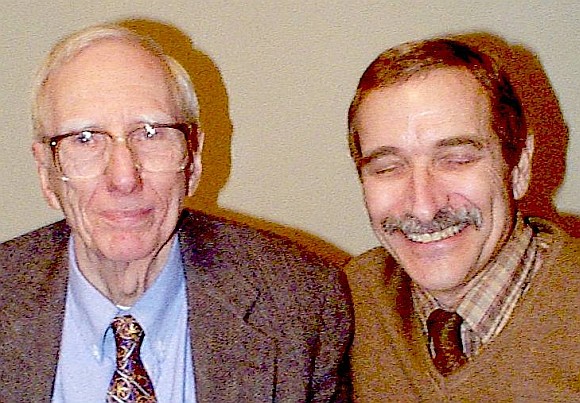 I've not met Robert Wuthnow, but he did call me on the phone when he was working on one of his books. This 1988 article on Civil Religion remains important: Divided We Fall: America’s Two Civil Religions . 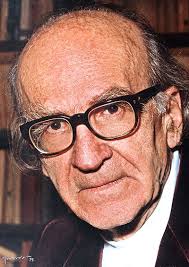 Mircea
Eliade, 1907-1986, was my teacher at the University of Chicago Divinity School --
and
my next-door neighbor. He and his wife Christinel presented a gift (now
politically incorrect) of a lotus ashtray with individual petals to my
bride and me at our wedding in 1970. Mircea
Eliade, 1907-1986, was my teacher at the University of Chicago Divinity School --
and
my next-door neighbor. He and his wife Christinel presented a gift (now
politically incorrect) of a lotus ashtray with individual petals to my
bride and me at our wedding in 1970. (I had told Mrs Eliade that when I first arrived on campus, I was convinced Eliade was wrong about a certain characteristic of myths, but when I studied with her husband, I discovered he was right. She was amused by my grad student naïveté.) Through his students and his dozens of books and his editing of the massive 15-volume Encyclopedia of Religion, Eliade remains probably the most influential teacher of "history of religions," a field he practically created. With additional scholarship since his time, his general approach and specific views have been challenged, reassessed, freshly criticized and freshly appreciated, but his work is as impossible to ignore in the "history of religions" as George Washington in the history of the United States. #Smith 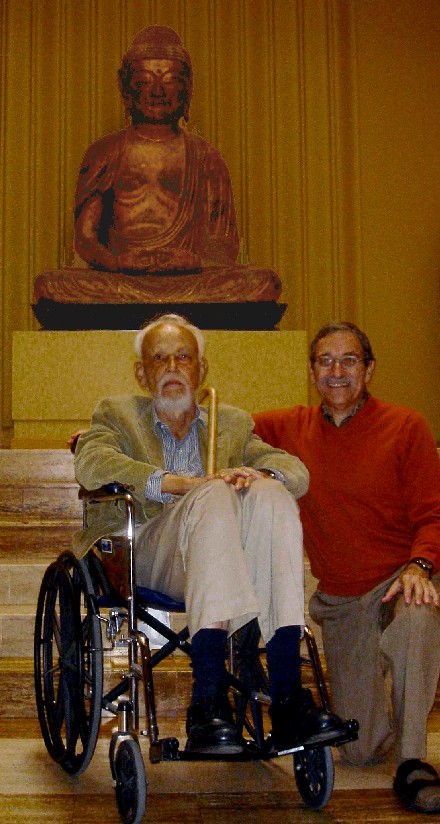 I first met Huston
Smith, 1919-2016, in 1969 or 1970 at the
Div School at the University of Chicago where he had studied and had
returned
to report on a second trip to Tibet. We kept running into each other at
various meetings and became friends. I have never met anyone who more
appropriately
can be termed a "gentleman." Born in China, in this 2005 photo at the
Kansas
City Nelson-Atkins Museum of Art, he looks very like a Taoist immortal!
Author of the all-time best-selling The World's Religions,
he consented
to being interviewed for my Kansas City Star columns repeatedly. I
cherish
taking him to his parents' graves in Marshall, MO. I collected some
other
photos as a remembrance
when he died
in 2016, aged 97.
#Wieman 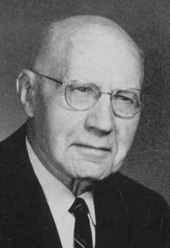 Henry Nelson Wieman was Huston Smith's father-in-law. But that is not how I met him. Later I heard Smith tell stories . . . . Henry Nelson Wieman was Huston Smith's father-in-law. But that is not how I met him. Later I heard Smith tell stories . . . .Wieman (1884-1975), an early exponent of "religious naturalism," had retired for the third time from the University of Chicago Divinity School, Southern Illinois University Carbondale, etc etc, when in 1969-70 he was persuaded to teach a course at the Center for Advanced Study in Religion and Science, across the street from where I was living at the University of Chicago. I sat in on the class. I think there were maybe six of us graduate students. One day I told Wieman I did not like his idea of God, and that I thought his views would be better expressed with the Buddhist notion of the Void. Wieman politely expressed interest and asked me to present an explanation of the Void to the class for the next class meeting. I did, and it was, shall I say, a humbling experience. His book, Man's Ultimate Commitment, is a rigorous and uncompromising call to religious life. What says with me all these years from Wieman is his valorization of "creative interchange," a power than can transform us as we cannot transform ourselves. (A curiosity: Both Wieman and Smith have important Missouri connections, and I used to teach at a school from which Wieman had graduated 70 years earlier.) #Patterson 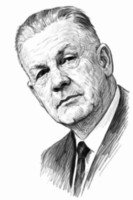 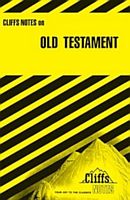 Charles
H Patterson (1897-1986) was my first philosophy professor. He was
chairman of the Department of Philosophy at the University of
Nebraska. He also taught the Bible -- in fact, he wrote Cliff's Notes on the Old Testament (I still have my copy, dated 1965) and on the New Testament
as well as on Plato and Aristotle and other texts. His books Principles
of Correct Thinking (1937) and Moral Standards (1949) were used in many
American classrooms for decades. Unlike his colleague OK Bouwsma, who
thought philosophy was about the analysis of language, Patterson
beelieved that philosophy was not a mere abstract academic exercise but
rather a practical guide for ethical conduct and a meaningful life. Charles
H Patterson (1897-1986) was my first philosophy professor. He was
chairman of the Department of Philosophy at the University of
Nebraska. He also taught the Bible -- in fact, he wrote Cliff's Notes on the Old Testament (I still have my copy, dated 1965) and on the New Testament
as well as on Plato and Aristotle and other texts. His books Principles
of Correct Thinking (1937) and Moral Standards (1949) were used in many
American classrooms for decades. Unlike his colleague OK Bouwsma, who
thought philosophy was about the analysis of language, Patterson
beelieved that philosophy was not a mere abstract academic exercise but
rather a practical guide for ethical conduct and a meaningful life. Afer I graduated, he asked me to become his teaching assistant. I graded papers for him. This was easy because he wrote out the ideas that should be in the essays I was grading. That's how I became acquainted with scholarly approaches to the Bible. But most of all I remember a full year seminar on Paul Tillich's 3-volume Systematic Theology, the last volume of which had been published by the University of Chicago Press just a couple years earlier. This was my first real theology course, an initiation into the depths without any introduction. Patterson was enthusiastic and insistent but graceful and gentle. Those volumes are within easy reach now, and increasingly prized. #Burhoe 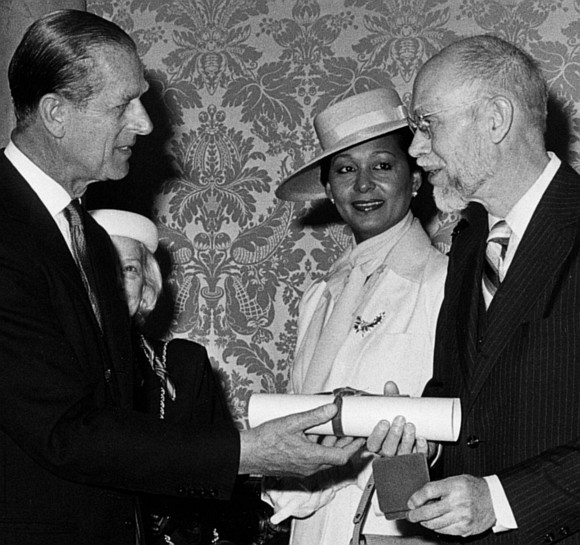 HRH Prince Phillip Duke of Edinburgh, presents the 1980 Templeton Prize for Progress in Religion to Ralph Wendell Burhoe (right) at Buckingham Palace. Professor Burhoe (1911-1997) knew everybody in science and religion, but never even graduated from college. He became the first full-time executive director of the American Academy of Arts and Sciences and later helped found the Institute on Religion in an Age of Science, Zygon: Journal of Religion and Science, and the Center for Advanced Study in Religion and Science. Because Burhoe lived next door to me, and I studied with him at the Center, I was able to meet a string of prominent scientists and theologians beyond the University of Chicago faculties. Burhoe was on my doctoral examination committee. Whew! I passed. PS. I did not take this photo, ha. #Campbell
#Gendlin #Tapp 97 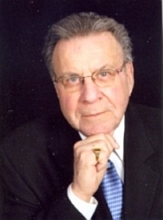 I owe so much to Robert B Tapp (1925?-2022). He was professor of philosophy of religion and my
dissertation advisor who somehow got me through the doctoral
examination. He introduced me to the scientific study of religion --
particularly Unitarian Universalism, and the excitement of using
computers in research, back in the day of the huge mainframe IBM 360
and punch cards. His book, generously naming me, Religion Among the Unitarian Universalists,* was published in 1973. I owe so much to Robert B Tapp (1925?-2022). He was professor of philosophy of religion and my
dissertation advisor who somehow got me through the doctoral
examination. He introduced me to the scientific study of religion --
particularly Unitarian Universalism, and the excitement of using
computers in research, back in the day of the huge mainframe IBM 360
and punch cards. His book, generously naming me, Religion Among the Unitarian Universalists,* was published in 1973. Six years after the new denomination was created by the merger of the Unitarians and the Universalists in 1961, questions of religious identity and the future were acute. Professor Tapp was charged with chairing a Committee on Goals. This involved surveying Unitarian Universalists on beliefs, attitudes, and demographics in a ground-breaking study. The research, with the assistance of the National Opinion Research Center, beautifully and carefully summarized with meticulously presented -- and to many, surprising -- statistics in the 46-page "Report of the Committee on Goals," was slated to be discussed at the 1967 Denver Unitarian Universalist General Assembly. The Report was also on the agenda for 1968 in Cleveland. (In my opinion the information in the report and its guidance was largely overshadowed by unexpected (disruptive?) special interests demanding attention. In 2005 he received the Horace Mann Humanist Education Award. Tapp was a model professor for a graduate student like me. Not only did he teach and mentor, but he made me, for a time, a part of his family. In addition to his Humanist perspective, he had a wonderful appreciation for Buddhism. A-academics, B-Buddhism, C-computers. Pretty good education, ABCs and more. Thanks and more thanks. *Full title: Religion Among the Unitarian Universalists: Converts in the Stepfathers' House (Quantitative studies in social relations)
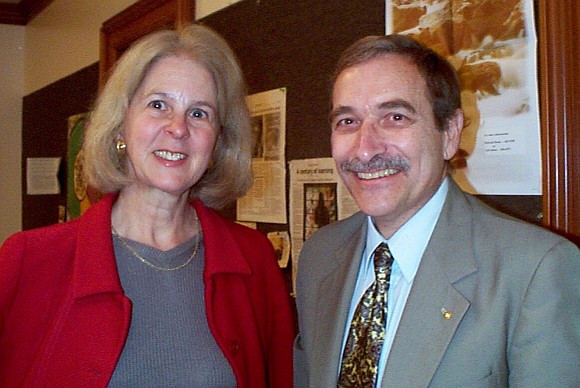
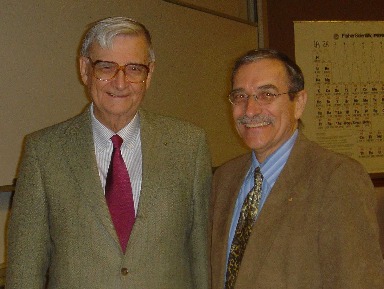 E O Wilson, 1929-2021 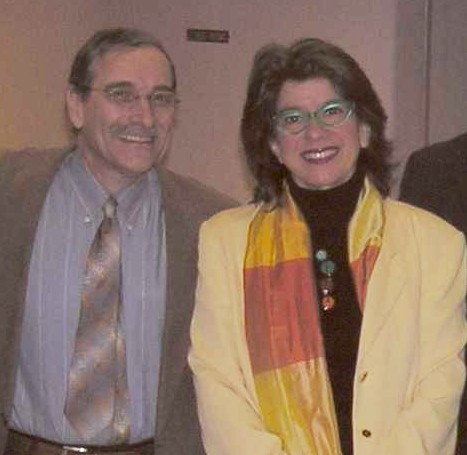 Dr Susannah Heschel, professor and daughter of Rabbi Abraham Joshua Heschel. 
Forrest Church, 1948-2009 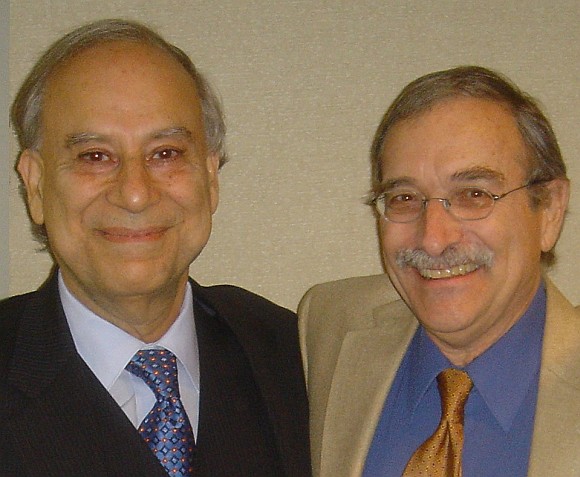 Akbar Ahmed 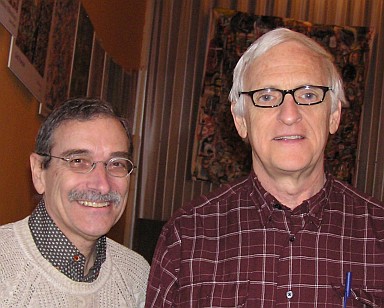 Matthew Fox 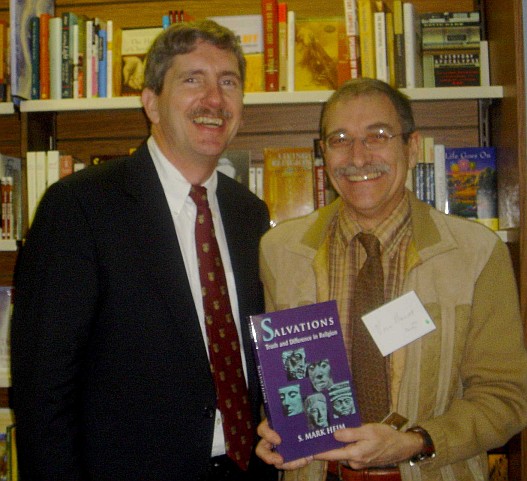 S Mark Heim, PhD, inscribed my copy of his book in 2005. Mark has contributed profound insights into the study of religious pluralism. Diana Butler Bass, PhD, religious scholar with expertise especially in contemporary American religion. 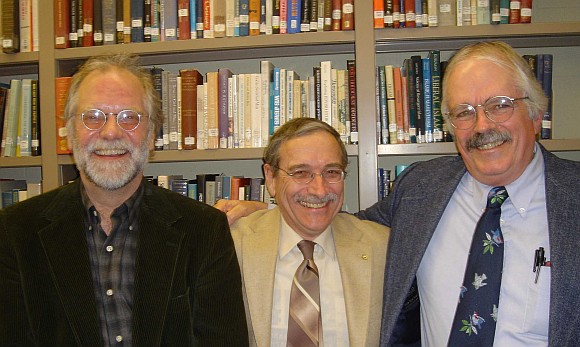
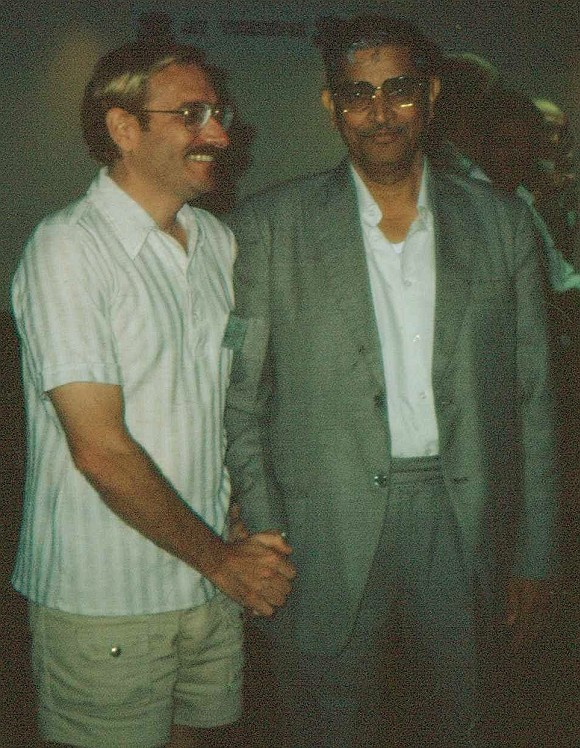 Pandurang Shastri Athavale, 1920–2003. His admirers called him Dada, Elder Brother. This photo was taken in India in 1986, I think, or during one of his visits to the US, possibly in Houston. 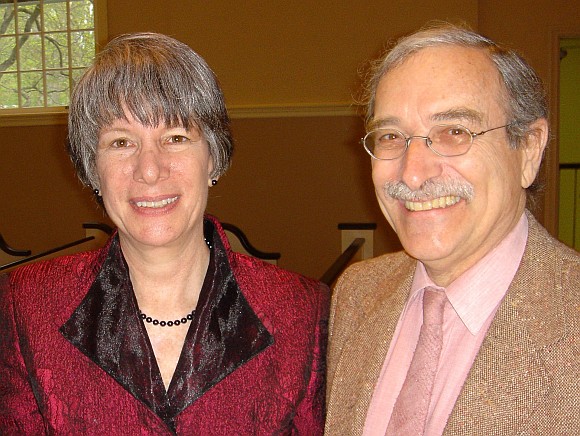
 Morris Berman - historian and social critic. #Truesdale
Professor Al Truesdale,
a marvelous friend from a conservative tradition. He taught at
the taught at the Nazarene Theological Seminary. One time I asked
him to be my guest at a class I was teaching at Ottawa University. He
happened to say he was working on a book responding to the most vexing
of all problems Christianity faces, the problem of evil, and he was
confident -- I forget exactly how he put it -- that his treatment of
the problem -- in theological terms, theodicy -- would be conclusive. I was surprised by the confidence he expressed in dealing with such an intractable problem. 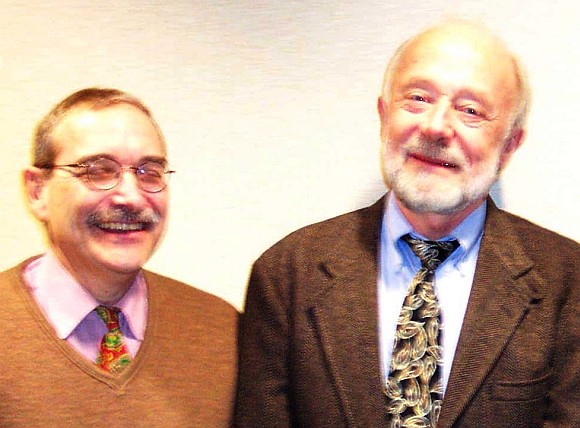
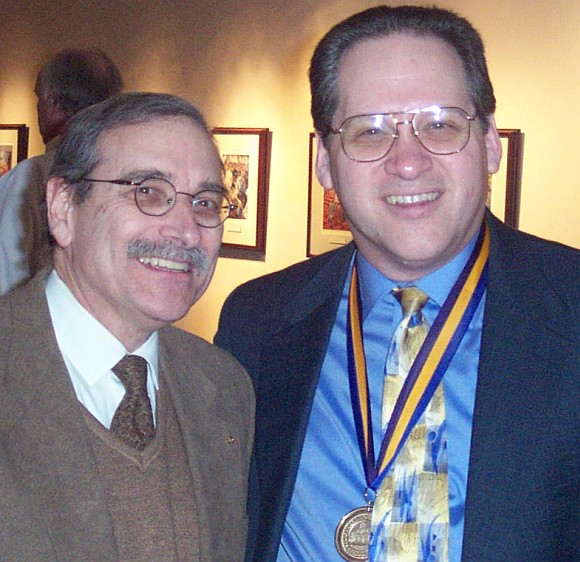
The Rev Don H Compier, PhD, dean of the Bishop Kemper School for Ministry. He served as president of the Socierty of Anglican and Lutheran Theologians. 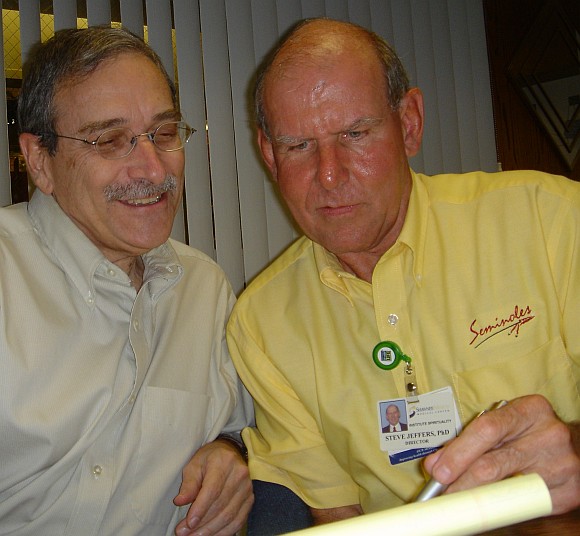 The Rev Steve Jeffers, PhD, chaplain at Shawnee Mission Medical Center in 2006. Steve got me started with him on writing what became, after his tragic death, with the help of two other editors, The Essential Guide to Religious Traditions and Spirituality for Health Care Providers, published on both sides of the Atlantic in 2012. 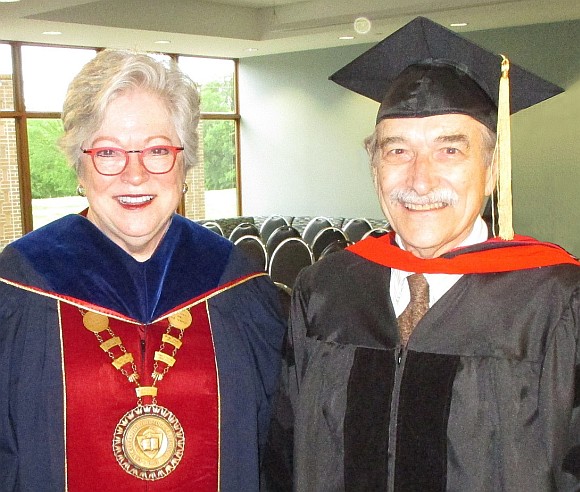 The Rev Molly Marshall, Phd, president of Central Baptist Theological School. 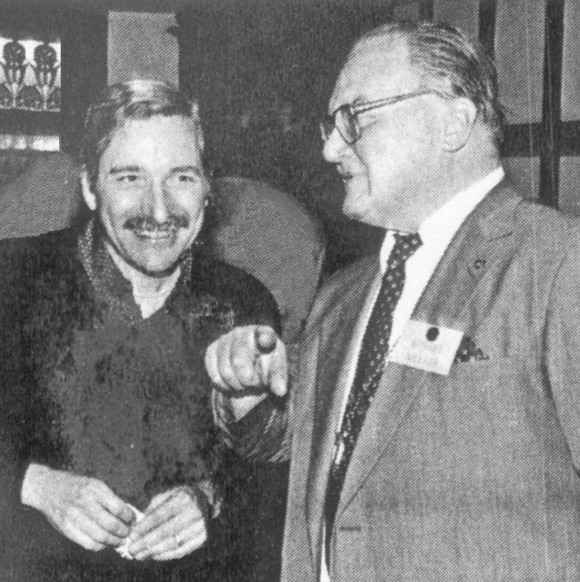 obert Muller was the United Nations Assistant Secretary-General under three Secretaries-General and became Chancellor of the University for Peace.
His was a memorably
free-wheeling graduate seminar
which ironically helped me understand form. He supported the wildest
literary
experiments from the students in such a way as to demonstrate that
poetry
generates an extraordinary range of reactions and interpretations. He
never said: Here's how I write; he said: Find out how you write. You
can see how others do it, and imitation can be a good exercize. But
write as you. And, personally, when I got into a bit of a jam as a graduate teaching assistant in the philosophy department, he helped get things resolved the right way. I think I learned not only something about how I write but maybe also learned some things from him about how to teach. 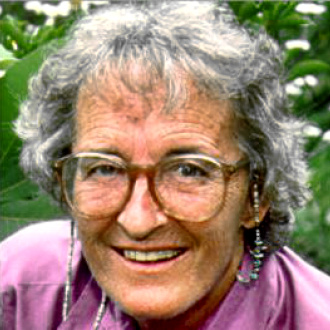 Elisabeth
Kübler-Ross (we called her "Dr Ross") was one of my clinical-pastoral
education internship supervisors at the University of Chicago hospitals
when I was studying for my doctorate. She was known as the "death lady"
because of her ground-breaking study of dying patients. When she first
began, she asked all the MDs for the names of their dying patients, and
they all said they had no patients dying. Those were the days of deep
denial.
As her study progressed, she became well-known. When I was her student,
Life magazine came to feature her work
(before her 1969 book On
Death & Dying was published), and she handled that
attention with
minimal fuss as they observed. It was just another routine class --
shocking,
heart-breaking, profoundly disturbing. She would interview the dying
patient
on one side of a half-silvered mirror (always with permission) while we
students were on the other side. When the interview was over, she would
come to our side. Her first question always was, "What was your gut
reaction?"
She taught us that we could not help anyone else unless we were aware
of,
and could manage, how we felt about the situation. Elisabeth
Kübler-Ross (we called her "Dr Ross") was one of my clinical-pastoral
education internship supervisors at the University of Chicago hospitals
when I was studying for my doctorate. She was known as the "death lady"
because of her ground-breaking study of dying patients. When she first
began, she asked all the MDs for the names of their dying patients, and
they all said they had no patients dying. Those were the days of deep
denial.
As her study progressed, she became well-known. When I was her student,
Life magazine came to feature her work
(before her 1969 book On
Death & Dying was published), and she handled that
attention with
minimal fuss as they observed. It was just another routine class --
shocking,
heart-breaking, profoundly disturbing. She would interview the dying
patient
on one side of a half-silvered mirror (always with permission) while we
students were on the other side. When the interview was over, she would
come to our side. Her first question always was, "What was your gut
reaction?"
She taught us that we could not help anyone else unless we were aware
of,
and could manage, how we felt about the situation.
She was not only brilliant but also a bit crazy, and I cannot forget a time just the two of us were in the chaplain's office. She went off on her views of the afterlife which she kept hidden from the public for some time until her reputation as a thanatologist was established. I was really uncomfortable. It felt like an intellectual assault and I was the victim. How could I argue with Dr Ross? but silence felt like I was conveying agreement. Her "five stages" --
denial, anger, bargaining,
depression, and acceptance -- have pretty well been disputed, but she
moved
our culture forward dramatically in dealing with the realities of dying
and death. She was, in all, a great teacher.
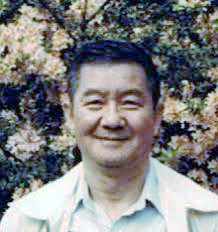 My
first year of graduate work was at the University of Nebraska where I
had
just completed my BA. There I had the great good fortune to study with Garma
Chen-Chi Chang, a Buddhist scholar who fled mainland China and was a
visiting
professor of religious studies from Penn State where he became Emeritus
Professor. One day he told the seminar that our assignment for the next
session was a 20-page paper on śūnyatā, the Buddhist
"void" or "emptiness."
I was a bit of a smart-ass in those days, and (before the personal
computer)
had a ream of typing paper with me. Under the seminar table I counted
out
20 blank sheets and then announced: "Professor, I have my paper ready now,"
and handed him 20 empty pages. He took out his grading pencil, looked
at
the "paper," and, making a beautiful Buddhist circle on the top sheet,
said, "Ah, very good, Mr Barnet; and I have your grade ready now," as
he
handed me the zero, answering my joke with what I hoped was his
joke. (Posted at the end of a memorial site.) My
first year of graduate work was at the University of Nebraska where I
had
just completed my BA. There I had the great good fortune to study with Garma
Chen-Chi Chang, a Buddhist scholar who fled mainland China and was a
visiting
professor of religious studies from Penn State where he became Emeritus
Professor. One day he told the seminar that our assignment for the next
session was a 20-page paper on śūnyatā, the Buddhist
"void" or "emptiness."
I was a bit of a smart-ass in those days, and (before the personal
computer)
had a ream of typing paper with me. Under the seminar table I counted
out
20 blank sheets and then announced: "Professor, I have my paper ready now,"
and handed him 20 empty pages. He took out his grading pencil, looked
at
the "paper," and, making a beautiful Buddhist circle on the top sheet,
said, "Ah, very good, Mr Barnet; and I have your grade ready now," as
he
handed me the zero, answering my joke with what I hoped was his
joke. (Posted at the end of a memorial site.)
The first term, as I remember, we used Huston Smith's The Religions of Man (later The World's Religions) supplemented with Chang's rigorous comments, and the second term we focused on varieties of Hinduism and particularly Buddhism. I cherish my notes, especially his own translation of portions of the Vimalakirti Sutra (now available in several English translations) which is one of my most prized of all the world's scriptures, along with the Heart Sutra and the utmost prize of the Hwa Yen Sutra, about which Chang later wrote in his The Buddhist Teaching of Totality. I loved learning about Fa Tsang (Fazang), the Golden Lion, and the room of mirrors for the Empress Wu Zhao (Wu Zetian). Perhaps best known among his other books are The Practice of Zen and The Hundred Thousand Songs of Milarepa. I happened to visit his apartment one time and was amazed at how spare -- empty -- his space was. Somehow to me that was a demonstration of the void, and a few years later, while a student at the University of Chicago Divinity School and an affiliated seminary, I was writing my doctoral dissertation on Voidism: A Theology for the Practice of the Liberal Ministry. #Hofstadter 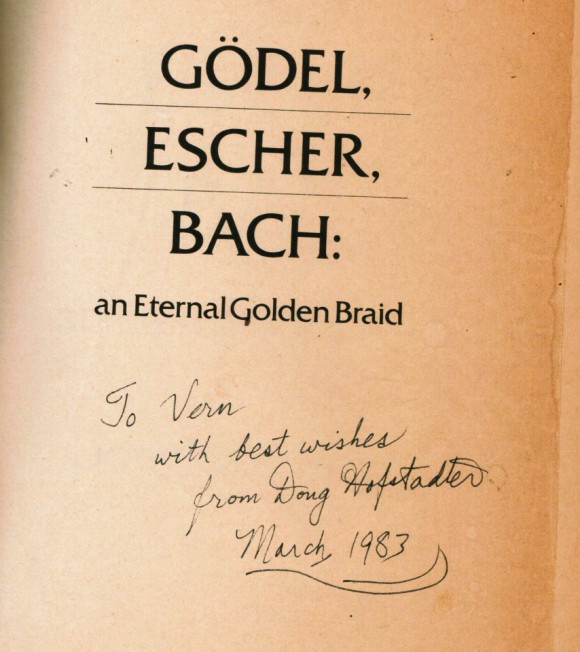 I
don't have a photo of Douglas Hofstadter, but when I had lunch with
him, courtesy of the computer science department at the University of
Kansas before he gave the most amazing lecture I have ever heard, he
signed my first copy of his first book which I still think is the most
amazing book ever written. I
don't have a photo of Douglas Hofstadter, but when I had lunch with
him, courtesy of the computer science department at the University of
Kansas before he gave the most amazing lecture I have ever heard, he
signed my first copy of his first book which I still think is the most
amazing book ever written.#Drinin 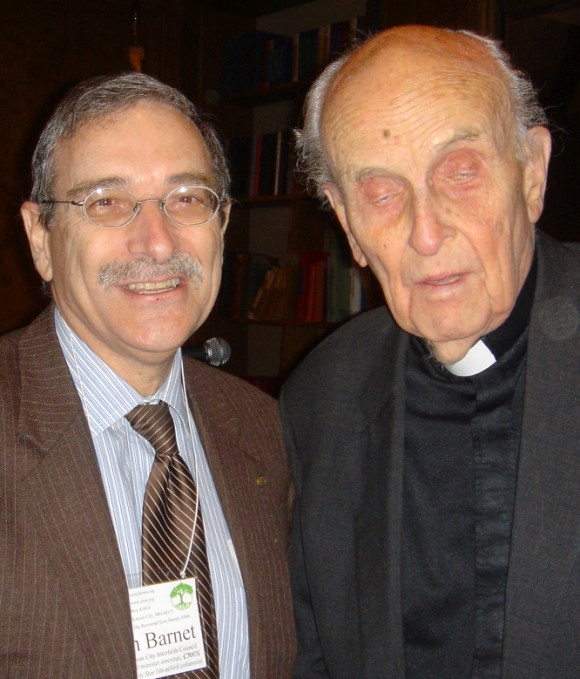 Father Robert Drinin, SJ (I didn't take this photo!) about the time the Vatican forced him to give up his seat in the US House of Representatives. #Ehrman 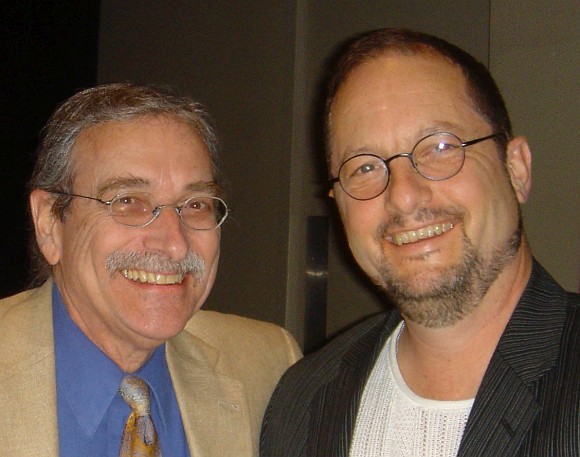 Bart D Ehrman #Spong 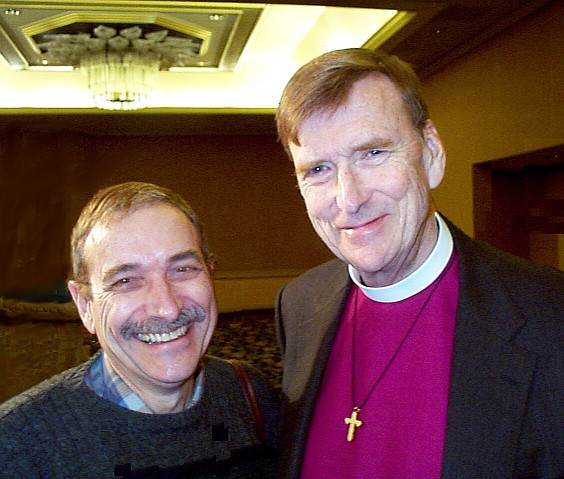 John Shelby Spong Bouwsma 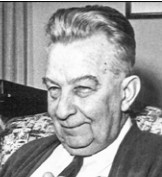 O K Bouwsma,
1898-1978, my teacher in maybe 1965. He was my first exposure
to analytic philosophy, but I didn't know it at the time. Bouwsman was
both a strong churchman and a colleague of Wittgenstein with whom he studied. O K Bouwsma,
1898-1978, my teacher in maybe 1965. He was my first exposure
to analytic philosophy, but I didn't know it at the time. Bouwsman was
both a strong churchman and a colleague of Wittgenstein with whom he studied.He attracted many students. The class on Berkeley (I still have the book with my notes) was huge. I said one thing in that class that he liked, but I did not understand why he liked it until years later. #ancestry |
|
My religious studies ancestors -- (I should probably begin with Heraclitus and Nargarjuna) Nicholas of Cusa, 1401-1464 Jean Bodin, 1530-1596 Herbert of Cherbury, 1583-1648 Friedrich Schleiermacher, 1768-1834 Max Müller, 1823-1900 William James, 1842-1910 tangential: Max Weber, 1864-1920 John Dewey, 1859-1952 Rudolf Otto, 1869-1937 Gerardus van der Leeuw, 1890-1950 O K Bouwsma, 1898–1978 (my teacher, 1963), colleague of Wittgenstein Garma Chen-Chi Chang, 1920-1988 (my teacher, 1965) Mircea Eliade, 1907-1986 (my friend and teacher, 1967-1970) My siblings -- Georges Bataille, 1897–1962 Wilfred Cantwell Smith, 1916-2000 Michel Foucault, 1926-1984 Ninian Smart, 1927-2001 Robert Bellah, 1927-2013 Richard Rorty, 1931-2007 Jonathan Z Smith, 1938-2017 Wendy Doniger, 1940- Bruce Lincoln, 1948- Tomoko Masuzawa Talal Asad Edward Said I considered but excluded important folks with influential opinions about religion, significantly defective in my view such as, for example: Emile Durkheim James G Frazer Bronislaw Malinowski Edward Burnett Tylor William Robertson Smith Sigmund Freud Karl Marx |
My Buddhist Background I have varying backgrounds in world religions. Here is an example. I am not a Buddhist expert. I am a life-long student of Buddhism. Sometimes people want to know my Buddhist background. Here is a sketch. My first Buddhist teacher, Chen Chi Chang, took his graduate seminar students through major forms of Buddhism and various philosophical systems that developed from them. Among American scholars, I had the good fortune to meet Frederick Streng after some correspondence when he was visiting Kansas City and wanted to see the Nelson-Atkins Museum of Art. I met Nikkyo Niwano, founder of Rissho Kosei Kai in 1981, during my second visit to Japan. I was impressed with the hoza (Dharma Circle). I was also amazed by the various facilities in Rokyo, a kind of Japanese Vatican. I later taught a class with his daughter when she was in the United States. I have studied at the Green Gulch Zen Center several times (including before Richard Baker Roshi was disgraced). With a Buddhist expert there I visited the site where the ashes of Alan Watts were scattered, and where a simple memorial for D T Suzuki has been erected. I have studied at the headquarters of the Tendai sect on Mount Hiei where I had the amazing fortune to visit with T Utsumi (who is pictured in The Marathon Monks). His answer to one of my questions was shattering. On another trip I visited the headquarters of the Shingon sect at Mount Koya. The answer to my question from the chief priest was also one of the most profound experiences of my life. I was able to question Seung Sahn, the Korean Zen master (Jogye Order) who founded the international Kwan Um School of Zen when he was in the Kansas City area some years ago. Seems like I have lots of questions! His answer also helped me understand the shape of Buddhism and its varieties. I have lectured at least a dozen times at the Rime (Tibetan) Buddhist Center in Kansas City, to which I was also an advisor. My dear friend, Dr Joshua Paszkiewicz (the most Venerable Sunyananda Dharmacarya) has both Korean and Vietnamese lineages and his teaching authority extends to Japanese Buddhism. He has taught here and in Asia. He mentions me in his first book, Zen and Happiness. Other books include Zen Buddhism and a book which has been translated into Spanish: Indian Spirituality: An Exploration of Hindu, Jain, Buddhist, and Sikh Traditions (Mystic Traditions). I am blessed to be one of his informal students. I guess I should mention that my 500-page doctoral dissertation was based on the Buddhist teaching of sunyata, emptiness, nothingness, the void, which Josh sometimes refers to as transparency. The title: Voidism: A Theology for the Practice of the Liberal Ministry. I describe it as "five hundred pages about Nothing." And just scratched the surface. In my eighteen years as the weekly "Faith and Beliefs" columnist for The Kansas City Star, I wrote about Buddhism from time to time. This meant keeping up to date with such subjects. I think of mysef as a life-long learner, so writing about what I was learning was, though not nirvana, a pleasure. |
https://www.amazon.com/s?k=God%27s+Problem%3A+How+te+Bible+Fails+to+Answer+Our+Most+Importat+Question
“
— ” ‘—’ 24
“ — ” ‘—’
18
“ — ” ‘—’
14
“ — ” ‘—’ 12
“
— ” ‘—’ 10
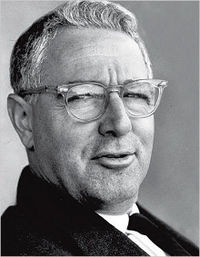 Pulitzer-prize
poetry winner
Pulitzer-prize
poetry winner