

|
|
Center
for Religious Experience and
Study
Stealing Another's Faith
copyright 1999
by Vern Barnet, Overland Park, KS
Click here
to
download an expanded PDF version.
| Settled
Many people nowadays have
at least an inkling that Christianity is largely a borrowed, if not stolen,
religion. But does that make it illegitimate or invalid? or does it thereby
acquire greater claim to universality?
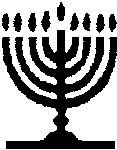
Who owns Hanukkah? But today the interface between faiths is unsettled. Misunderstandings are common, and within any one tradition there may be different responses to using materials from one faith by those of other faiths. For example, an increasingly popular practice by many Christians at Easter is to celebrate seder, a Passover meal. They think they are honoring Jewish friends, but many Jews do not think it is respectful for Christians to make what is a story central to Judaism into an appetizer for a Christian feast. It suggests that Judaism has value only as a precursor to Christianity. But the development of Judaism did not end with the age of Jesus; on the contrary, its richness and depth continues because it is a living faith, not dependent on Christianity. Its own theologians and extensive literature in the last 2000 years have added greatly to its earlier heritage. Rabbinic Judaism, for example, emerges as a major expression of Jewish life decades after the death of Christ. The Talmuds took form in the Fourth and Fifth Centuries. Maimonides wrote in the Twelfth Century. The mysticism of the Middle Ages produced the Zohar, a central book of the kabbalah. Pogroms, emigration to the United States — and Zionism and the Holocaust, two major features of Twentieth Century — have continued to reshape Jewish experience. The development of ritual observances during the last two millennia has continued to the present with Yom ha-Shoah. When my son was ten, he
wanted to light Hanukkah candles. Many Jews resent the attention given
by non-Jews to this relatively minor holiday while the major holy days
like Rosh Hashanah, Yom Kippur, and Pesah are so poorly understood. Calling
Hanukkah the “Jewish Christmas” is utterly offensive. For my son, some suggested that at least the accompanying prayers be altered to recognize that he is not Jewish. Others suggested that he seek an invitation to a Jewish home where he could observe the ceremony. Does Hanukkah belong only to Jews? It might be easy to say
Yes — except if we recall Billings, Montana, in 1993, when a Jewish family
placed a menorah in their window and received a hostile brick breaking
the glass in reply. Christians responded to this message of hate by placing
images of menorahs in their home and church windows, isolating bigotry
with a community testimony that Hanukkah, in a sense, belongs to everyone.
Christian cars, homes and churches were vandalized. Hate against any group
is hate against us all.
Who owns Jesus? While it is perfectly natural for some Hindus to regard Jesus as divine, as an incarnation of Vishnu, the notion that Jesus might be revered as a Hindu god is a problem for many Christians. Since Muslims have always revered Moses, Jesus, Muhammad and other prophets, and protected the practice of the Jewish and Christian faiths, one needs to understand why Jesus can belong to the Muslims without much objection from Christians, but Hindu claims make some Christians uncomfortable — ironic since Gandhi attributed much of his Hindu faith to the inspiration of the words of Jesus. Some religions maintain
strict boundaries between theirs and others’ faiths. In some cases (Zoroastrians)
it has been difficult for anyone not born into the tradition to adopt that
faith. Others (Muslims) consider everyone (at least potentially) a member
of their own faith.
Flesh for faith The issue here is not forced
or urged conversions, but the opposite: a thoughtless though well-intentioned
transfer, claiming as one’s own that which one has not earned. Is it possible
for a life-long American who develops a sudden interest in Shinto to become
a Shintoist without also becoming Japanese? Yet Buddhism is now certainly
an American religion, and has been for at least a hundred years. What is
the difference between Shinto and Buddhism? There is an answer, but it
may not be obvious — and it may not hold in the future.
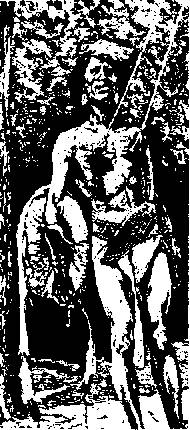
Is there anyone who has thought about it who is not offended by the Kansas City Chiefs football team fans doing the “tomahawk chop”? Tunes ascribed to the “savages” — Indians, blacks, and others — are not only fake but are disrespectful. And yet I think of
a remarkable young man who has earnestly studied with American Indians.
His knowledge is extensive, his sincerity unquestionable, his training
earned through authentic teachers. He is a sun dancer, over several years
pierced three times. Though he has sacrificed his flesh, he is criticized
as a “wanna-be” by some who want to keep those rituals solely to themselves.
Nothing new Of course this sort of
thing goes on all the time. The Jews adapted and reacted to Canaanite practices,
the story of Noah originates with the Sumerians, and Mosaic law echoes
(and Nowadays nuns are doing
yoga and lay people are trying zen. I see an ankh, a symbol from ancient
Egypt, worn by someone I meet for the first time almost every week. The
meaning of the yin-yang image of ancient China is being narrowed into a
symbol for Taoism by Westerners Religions change The Harvard scholar W C
Smith suggests that we should no longer use the term “religion” because
it perpetuates the notion that religions remain the same, instead of constantly
changing from within by erosion and from interchange at shifting shorelines,
sometimes by earthquakes, within a single religious adventure on this planet. Nonetheless we need to
understand how some view their traditions as revealed or the exclusive
property of a certain people. In our own time, Jews, Tibetan Buddhists,
and others have witnessed genocidal attempts. Some Native Americans, keenly
aware of the destruction of their cultures by the Christians, resent “wanna-be
Indians” who, they believe, rob them of their sacred traditions and profane
the practices of the Elders by taking them into the dominant culture which
fails to have the reverence and understanding to be worthy of them. Other
Native Americans simply add Christianity to their Native ways, and call
themselves Christian Indians, offending some of their own people who identify
themselves “traditional.”
Religious identity If I am going to speak, I must speak a particular language. If I am going to be religious, I must follow a particular path. It is true that languages “borrow” words from each other, and English is especially rich for this reason. Still, an artificial religion, created by stealing what others have in the hope of devising a universal faith, is likely to have no more success than Esperanto has had as a universal language. However, eating mulligatawny soup does not make me Hindu, or latkes make me Jewish. My own faith is not compromised by tasting and digesting. How can enjoying them be judged disrespectful? Well — if I steal them. But can it be said any
longer that Shakespeare belongs only to the English, or Caravaggio to the
Italians, or Beethoven to Europe, or the Beach Boys to California, or Mu
Chi to the Chinese? This is not to say that
Beethoven is the Beach Boys or that Mahavira and Muhammad taught the same
thing. The differences are profound, and should be preserved because each
tradition is enlarged by genuine encounter — not necessarily agreement
— with the others.
The lure of the Holy It is too easy to dismiss, or condemn, or romanticize those who experiment with other faiths. True, digging one 60-foot well is more likely to produce water than digging a dozen 5-foot wells. Yet even a drink of water brought from afar can refresh. But we are not as impressed with a swimmer who remains in the shallows as with one who has coursed the full channel. We can insist that those who head into the deep do so with more than sincerity, more than academic knowledge, more than decorative arrangements or enhancements to their thinking. We can insist that the substance be revealed in how they live their lives. And when we find those who, fully at terms with their own culture and faith heritage, are able to experience the Sacred in other ways, let us see the possibility of renewal for all of us. Indeed, if we are to understand
our own faith, we must know about others. “What knows he of England who
only England knows?” asked Rudyard Kipling. “He who knows one religion Just as allegiance to any nation must now be placed in the context of a more basic commitment to the planet and all of its people, so commitment to the manifestations of any single faith must be placed in the context of our most urgent devotion to the Holy. Today, more than ever, pilgrims chart the spaces between the traditions, and explorers now range into foreign lands and become increasing conversant and respectful of their new territory, and especially gifted in helping the rest of us apprehend that strange region. We may not learn much from the tourist who gawks, but from the pilgrim who explores our faith and others’, perhaps with the sincerity of walking on bleeding knees, we may learn much about ourselves. Can we fail to offer hospitality to those open to the richness of kinship with us? Thus these words by Ashoka
(3d Century BCE) remain fresh: “One should not honor
only one’s own religion and condemn the religions of others, but one should
honor others’ religions for this or that reason. So doing, one helps one’s
own religion to grow and renders service to the religions of others, too.
In acting otherwise one digs the grave of one’s own religion and also does
harm to other religions.
In the fragmented, violent, unfair world today, the stranger of faith, the wayfarer, the pilgrim, may be the companion we need on the path — even around the block. Even that short trip may be problematic, for the territory itself is undergoing change, and stumbling is almost inevitable. Yet with good will we can pick each other up when we meet. In the time we travel together, we can be pulled, supported, and renewed by the lure of the Holy through an unrelentingly profane age. For a view of how world religions respond to the three crises of our age, please await the January insert, “The Worlds Religions: Pieces or Pattern?” adapted from the 1999 monthly installments on page 7 of Many Paths. |
 The Christian story emerges from the Jewish tradition (for example, “Messiah”
is reinterpreted); its ideas (such as immortality through identification
with Christ) are largely Hellenistic; its festivals derive from and are
enriched by pagan faiths (the sun-god Mithra was reborn on the winter solstice,
Dec 25 on the old calendar, commandeered for Christmas, the Christmas tree
itself a more recent theft from pagan practices); many of its structures
(the Pontifix Maximus, for example) have descended from ancient Rome, and
some of Paul’s letters show the obvious influence of Zoroastrianism. Borrowed
or stolen, they are undisputed aspects of Christianity now.
The Christian story emerges from the Jewish tradition (for example, “Messiah”
is reinterpreted); its ideas (such as immortality through identification
with Christ) are largely Hellenistic; its festivals derive from and are
enriched by pagan faiths (the sun-god Mithra was reborn on the winter solstice,
Dec 25 on the old calendar, commandeered for Christmas, the Christmas tree
itself a more recent theft from pagan practices); many of its structures
(the Pontifix Maximus, for example) have descended from ancient Rome, and
some of Paul’s letters show the obvious influence of Zoroastrianism. Borrowed
or stolen, they are undisputed aspects of Christianity now.
 dramatically
improves) the Code of Hammurabi.
dramatically
improves) the Code of Hammurabi.
 ignoring
Confucianism and Chinese folk religion. Hindus in America meet on Sundays,
lending to a day of secular convenience a spiritual value. Indeed, part
of the genius of Hinduism has been its ability to integrate and accommodate
within it the influences it has encountered throughout the ages, from at
least the Aryan invasions. But then “Hinduism” itself is a Western artifact,
a fiction devised by lumping together the tremendously varied practices
on the subcontinent under one convenient term.
ignoring
Confucianism and Chinese folk religion. Hindus in America meet on Sundays,
lending to a day of secular convenience a spiritual value. Indeed, part
of the genius of Hinduism has been its ability to integrate and accommodate
within it the influences it has encountered throughout the ages, from at
least the Aryan invasions. But then “Hinduism” itself is a Western artifact,
a fiction devised by lumping together the tremendously varied practices
on the subcontinent under one convenient term.

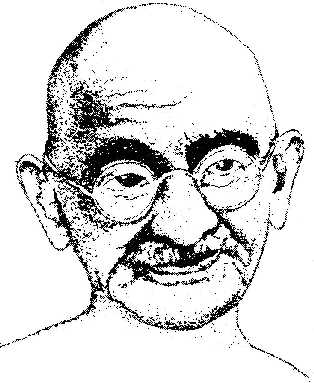 Can
we say that Gandhi belongs only to the Hindus, or Moses only to the Jews,
or Spider Woman only to the Navahos, or Chuang Tzu only to Taoists, or
Nagarjuna and the Dalai Lama only to Buddhists, or Ibn Arabi only to the
Muslims? Perhaps they are all a part of a shared human history, a complicated
and problematic quest for the holy.
Can
we say that Gandhi belongs only to the Hindus, or Moses only to the Jews,
or Spider Woman only to the Navahos, or Chuang Tzu only to Taoists, or
Nagarjuna and the Dalai Lama only to Buddhists, or Ibn Arabi only to the
Muslims? Perhaps they are all a part of a shared human history, a complicated
and problematic quest for the holy.
 knows
none,” said Max Müller. Learning about other faiths in order to deepen
our own is not stealing or corrupting. It is a respectful way for the Christian
to become a better Christian, the Muslim a better Muslim, the Buddhist
a better Buddhist.
knows
none,” said Max Müller. Learning about other faiths in order to deepen
our own is not stealing or corrupting. It is a respectful way for the Christian
to become a better Christian, the Muslim a better Muslim, the Buddhist
a better Buddhist.